
Premium Shade Sail Fabric in Arizona | Commercial 95 & SolaMesh Shade Cloth
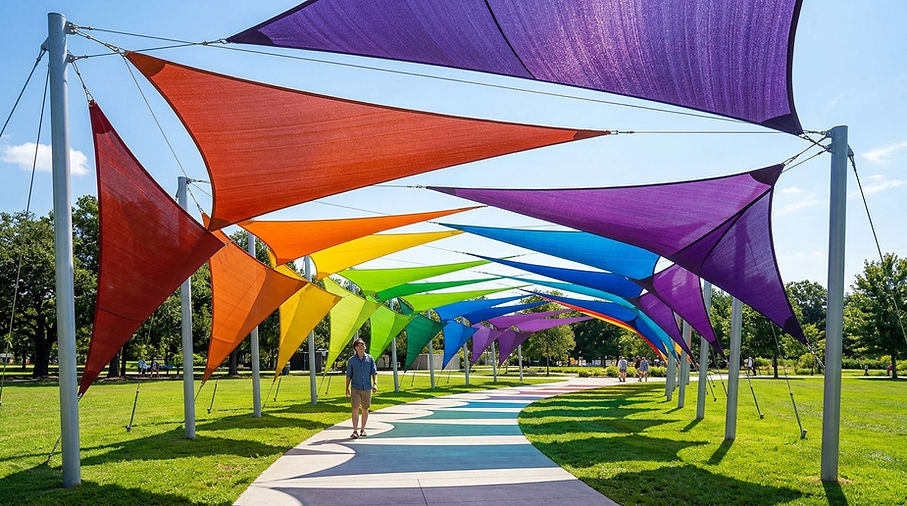
We use premium commercial-grade shade cloth fabrics because Arizona sun is not the place to gamble with cheap material. Our shade sails and replacement shade panels are built with trusted performance fabrics such as Commercial NinetyFive 340 and SolaMesh®, both designed for outdoor shade sails, tension structures, patios, playgrounds, parks, and commercial shade applications. Commercial NinetyFive 340 is a UV-stabilized HDPE architectural shade fabric offering up to 96% UV protection, while SolaMesh® is an HDPE shade sail fabric engineered for strength, durability, and UV performance. Where specified, we sew with GORE® TENARA® thread, a premium outdoor thread that resists UV sunlight, weather, water, chemicals, saltwater, and extreme outdoor conditions.
Better fabric.
Better seams.
Better shade.
Because in Arizona, “good enough” gets cooked.


Fabric Warranty:
Commercial 95 and SolaMesh shade fabrics are premium outdoor shade fabrics backed by limited manufacturer warranties against UV degradation and fabric strength loss under normal intended use. Commercial 95 warranty terms may vary by product version and supplier, with commonly listed coverage ranging from 10 years to 15 years depending on the specific Commercial NinetyFive fabric line. SolaMesh is backed by a 10-year limited manufacturer warranty when used for shade structures and similar applications. All fabric warranty claims are subject to the manufacturer’s written terms, exclusions, documentation requirements, and approval process.
Warranty does not cover damage caused by improper installation, wind load, storms, structural failure, unsuitable attachment points, improper tensioning, abrasion, chemical exposure, misuse, neglect, customer modifications, normal wear and tear, or failure to maintain or remove the shade product during unsafe weather conditions. Hardware, installation, engineering, permits, posts, anchors, and customer-supplied structures are not included in the fabric warranty unless expressly stated in writing.
Product Supply Notice:
Southwest Shade Sails sells custom shade fabric products manufactured and supplied by Phoenix Canopy & Shades LLC. We provide the shade fabric only. Installation, engineering, permitting, hardware selection, attachment-point strength, and site-specific safety are the responsibility of the customer and/or their installer.
Hardware Used for Shade Sail AttachmentSouthwest Shade Sails provides shade sail fabric products and optional hardware components for customers, property owners, contractors, and installers who are sourcing materials for shade sail projects. Shade sail hardware is used to help connect a shade sail to approved attachment points such as posts, beams, walls, or other properly designed structural supports.
The correct hardware may vary depending on the size of the shade sail, site conditions, wind exposure, attachment surface, building material, installation method, and local code requirements.
Southwest Shade Sails does not install shade sails, design structural support systems, provide engineering, or verify attachment points. This is solely the responsibility of the property owner, and/or installer and not that of Southwest Sail Shades or Phoenix Canopy & Shades LLC.
*All hardware shown or sold is intended for use only by qualified installers, licensed contractors, or experienced individuals who understand proper shade sail tensioning, anchoring, and structural load requirements.
Common Shade Sail Hardware Components
Turnbuckle
A turnbuckle is used to help tension the shade sail after it has been attached to the mounting points. Proper tension is important to help reduce sagging, fabric movement, and unnecessary stress on the sail. Turnbuckles should never be overtightened. Excessive tension can damage the shade sail, hardware, attachment points, posts, walls, or surrounding structures.
Pad Eye
A pad eye is a fixed attachment plate that may be mounted to an approved structural surface. It provides a connection point for the shade sail hardware system. Pad eyes must only be attached to surfaces that are structurally capable of supporting the load created by the shade sail. Mounting a pad eye into weak wood, thin fascia, stucco, drywall, decorative trim, or non-structural material can result in failure, property damage, or injury.
Snap Hook
A snap hook is commonly used as a removable connector between the shade sail and other hardware components. It allows for easier attachment and removal when needed. Snap hooks should be properly sized for the application and inspected regularly for wear, corrosion, bending, or damage.
Cable Wire
Cable wire may be used in certain shade sail attachment configurations to extend or support a connection point. Cable should be properly tensioned, terminated, and installed using compatible fittings. Cable wire should not be used as a substitute for engineering, proper structural support, or correct installation methods. Fancy cable does not magically defeat physics, sadly.
Anchor
Anchors may be used when attaching hardware into masonry, concrete, block, or other approved surfaces. The correct anchor type depends on the attachment surface, load requirements, edge distance, material strength, and environmental conditions. Customers and installers are responsible for selecting the correct anchor for their specific installation.
Screw
Screws may be used with certain hardware components depending on the mounting surface and installation design. Screws must be properly rated, corrosion-resistant, and appropriate for the material they are being installed into. Standard household screws are not automatically acceptable for shade sail installations.
Important Installation Notice
Shade sails are tensioned fabric structures. When exposed to wind, rain, storms, or improper installation, they can create significant force on hardware, posts, walls, beams, fascia, rooftops, and other attachment points. Because every property is different, Southwest Shade Sails cannot determine whether your attachment points, hardware selection, structural supports, or installation method are safe or code-compliant.
The customer, property owner, contractor, installer, or project manager is fully responsible for confirming that: The structure can safely support the shade sail. All attachment points are properly designed and reinforced. All hardware is compatible with the project.The installation complies with applicable building codes, HOA requirements, permitting requirements, and local regulations. Engineering is obtained when required. The s hade sail is removed during unsafe weather conditions when appropriate.
Hardware Compatibility Disclaimer
Hardware displayed on this website is provided for general informational and product selection purposes only. Hardware shown may not be suitable for every installation. Product photos, diagrams, measurements, and examples are not engineering drawings, installation instructions, or guarantees of performance. Southwest Shade Sails makes no warranty or representation that any hardware item is appropriate for a specific project, property, surface, structure, or installation method unless confirmed in writing through a separate professional review.
Customer Responsibility
By purchasing shade sail fabric, hardware, or related products from Southwest Shade Sails, the customer understands and agrees that they are responsible for the safe use, handling, installation, maintenance, and removal of the product. The customer is responsible for hiring a qualified professional when needed. This may include a licensed contractor, structural engineer, architect, or other qualified installation expert.
Southwest Shade Sails is not responsible for damage, injury, failure, loss, or claims caused by:
-
Improper installation.
-
Incorrect hardware selection.
-
Weak or unsuitable attachment points.
-
Lack of engineering.
-
Over-tensioning or under-tensioning.
-
Improper post spacing or post depth.
-
Attaching to fascia, stucco, block, wood, metal, rooflines, or other surfaces without verifying structural capacity.
-
Failure to follow local code, permit, HOA, or inspection requirements.
-
Wind, storms, monsoon activity, rain pooling, hail, extreme heat, UV exposure, or other weather conditions.
-
Customer modification of the product or hardware. Use of third-party installers, contractors, handymen, or DIY installation methods. Normal wear and tear. Failure to inspect or maintain the product.